
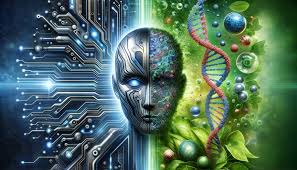
In the year 2147, the world had transformed into a society where DNA-based digital identities were the cornerstone of everyday life. Every individual’s genetic code was encoded into a digital ID, stored in a global network known as the GenoNet. This system promised unparalleled security, efficiency, and personalization. But as with any technological leap, it came with its own set of advantages and disadvantages.
The Advantages: A Seamless Society
For 28 year old Kael, life in this DNA,driven world was mostly convenient. His DNA-ID allowed him to access everything from his apartment to his hovercar with a simple touch. No more forgotten passwords or stolen identities,his genetic code was unique, and it was his key to the world.
One morning, Kael woke up feeling unwell. He placed his hand on the health scanner embedded in his bathroom mirror. Instantly, the system analyzed his DNA and detected a minor viral infection. Before he could even finish brushing his teeth, his personalized medication had been prepared by his home nanobot dispenser. The system had already notified his workplace that he needed a day off, and his boss had approved it without question.
Kael marveled at how efficient life had become. Crime rates had plummeted because DNA,based identities made it nearly impossible to commit fraud or theft. Medical treatments were tailored to each individual’s genetic makeup, eliminating trial-and-error prescriptions. Even shopping was a breeze,stores automatically adjusted their displays to show products that matched his preferences and dietary needs.
The GenoNet also connected people in ways never before imagined. Kael’s dating app, for instance, used his DNA,ID to match him with partners who were genetically compatible. It wasn’t just about romance; it was about creating healthier, happier futures for the next generation.
The Disadvantages: The Dark Side of Perfection
But not everything was perfect. Kael’s best friend, Lira, had a different perspective. She worked as a journalist and had seen the darker side of the system. One evening, over a synthesized coffee at a rooftop café, she shared her concerns.
“Do you ever feel like we’ve given up too much control?” Lira asked, her voice low. “Our entire lives are dictated by our DNA. What if the system makes a mistake? What if it decides you’re not worthy of something?”
Kael shrugged. “The system doesn’t make mistakes. It’s designed to be flawless.”
Lira leaned in closer. “Last week, I met a man who was denied a job because his DNA profile flagged him as having a ‘predisposition to stress.’ He was perfectly qualified, but the algorithm decided he wasn’t a good fit. How is that fair?”
Kael frowned. He hadn’t considered that. The system was supposed to create equality, but stories like this made him wonder if it was doing the opposite.
Then there was the issue of privacy. While the GenoNet was secure, it wasn’t infallible. A few months ago, a hacker group had breached a regional server and leaked the DNA profiles of thousands of people. The fallout was catastrophic,people’s genetic vulnerabilities were exposed, and some were even blackmailed. Kael remembered the fear that had gripped the city. For the first time, he had felt vulnerable in a system that was supposed to protect him.
A Personal Crisis
Kael’s doubts grew when his younger sister, Mila, was diagnosed with a rare genetic disorder. The system immediately flagged her as “high risk” and restricted her access to certain public spaces. She was barred from attending her dream university because the algorithm determined she might not live long enough to complete her degree.
“It’s like they’ve already given up on me,” Mila had cried. Kael felt helpless. The system that was supposed to protect and empower had instead become a prison.
Determined to fight back, Kael and Lira joined an underground movement called “FreeGene,” which advocated for the ethical use of DNA-based identities. They argued that while the technology had its benefits, it shouldn’t dictate every aspect of human life. People deserved the right to make their own choices, even if those choices went against what their DNA suggested.
The Turning Point
One night, Kael attended a FreeGene rally. The atmosphere was electric, filled with people from all walks of life. those who had been denied opportunities, those who feared the loss of privacy, and those who simply believed in the importance of free will.
As Kael stood among the crowd, he realized that the system wasn’t inherently good or bad. It was a tool, and like any tool, its impact depended on how it was used. The advantages were undeniable: a safer, healthier, more efficient society. But the disadvantages,loss of privacy, algorithmic bias, and the erosion of personal freedom,were too significant to ignore.
The Future
In the end, Kael and Lira’s efforts led to a global conversation about the ethical use of DNA based identities. Reforms were implemented to ensure that the system served humanity, not the other way around. People regained control over their lives, and the GenoNet became a tool of empowerment rather than oppression.
As Kael looked out over the city skyline, he felt a sense of hope. The future was still uncertain, but one thing was clear: technology could shape society, but it was up to humanity to decide what kind of society they wanted to create. And in that balance between innovation and ethics, Kael believed, lay the true promise of the future.
 T
T