
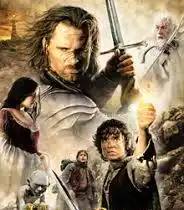
When it comes to the field of film adaptations, Peter Jackson’s ‘The Return of the King’ holds a prominent place, serving as the successful conclusion to his massive ‘Lord of the Rings’ trilogy. It is presented not just as a movie but as a painstakingly constructed conclusion to J.R.R. Tolkien’s acclaimed novel. In order to bring the War of the Ring to a definitive close in a dramatic and powerful climax, the movie attempts the difficult task of weaving together several narrative threads.
The use of visual effects serves to enhance the story without overpowering the actors, while the visual artistry ,which is typified by expansive landscapes and thoughtfully planned close-ups, evokes awe. It produces performances with a great deal of emotional resonance. Jackson’s approach to directing, which is marked by faithfulness to the original work and skillful control of the film’s expansive scope, highlights the emotional impact of the story. His technical skill makes for a really engaging viewing experience. His directing skills are demonstrated by the film’s extensive scope and its excellent ending.
“The Return of the King” carves out a noteworthy niche for itself in the history of film.
It has a lasting cinematic impact because of its fantastic and intricate story, wide range of visuals, and gripping performances. It is more than just a movie; it is a cultural phenomenon, and its critical and financial success has cemented its place as a fantasy classic, impacting both audiences and filmmakers. It provides an emotional and definitive conclusion to a beloved story, a classic work of art.