
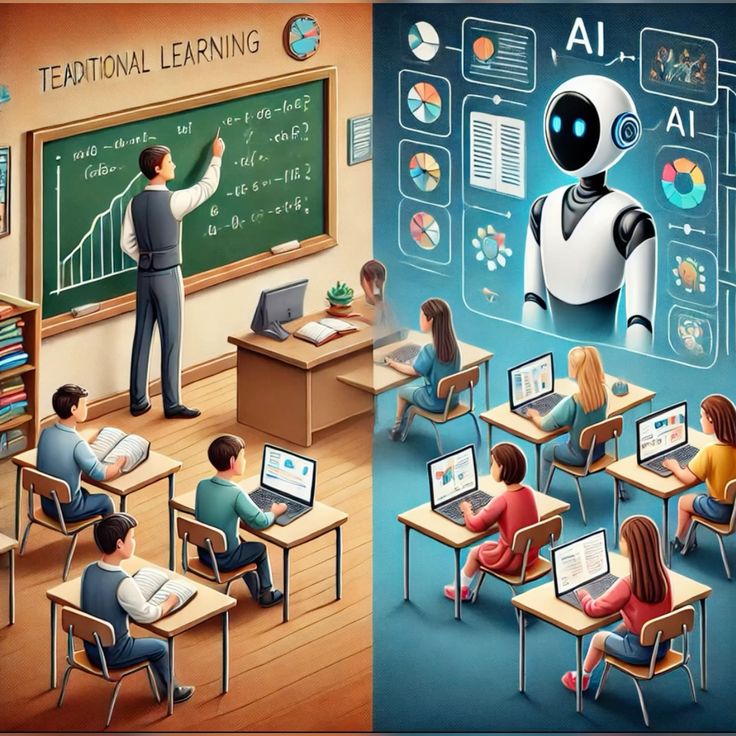
In recent years, artificial intelligence has become an increasingly common part of students’ academic lives. From generating ideas for essays to solving complex mathematical problems, AI tools are now easily accessible to many young people. A significant number of teenagers rely on artificial intelligence for their school work which creates the question; Does AI helps learning or it harms the process?
One clear advantage of artificial intelligence is the support it can provide to students who are struggling. AI systems can offer explanations in simpler language, provide examples, and even suggest ways to improve written work. For instance, a student who finds it difficult to structure an essay may use AI to see how ideas can be organised logically. This can help learners gain confidence and better understand academic expectations. In this way, AI can act as a personalised tutor that is available at any time. It can also be beneficial for time management. A student who having a hard time doing their homework, study and prepare to the exams at the same time can get a free assistant.
On the other hand, there are significant concerns about the overuse of artificial intelligence. If students begin to depend on AI for completing assignments, they may not develop essential skills such as critical thinking, creativity, and independent analysis. Furthermore, submitting work generated mainly by AI raises ethical questions about honesty and fairness. Education is not only about producing correct answers, but also about developing the ability to think deeply and solve problems independently.
In conclusion, artificial intelligence can be a valuable educational tool when used responsibly and in moderation. However, students must ensure that they remain actively involved in their own learning process. So AI should enhance education rather than replace the effort and originality of students.