
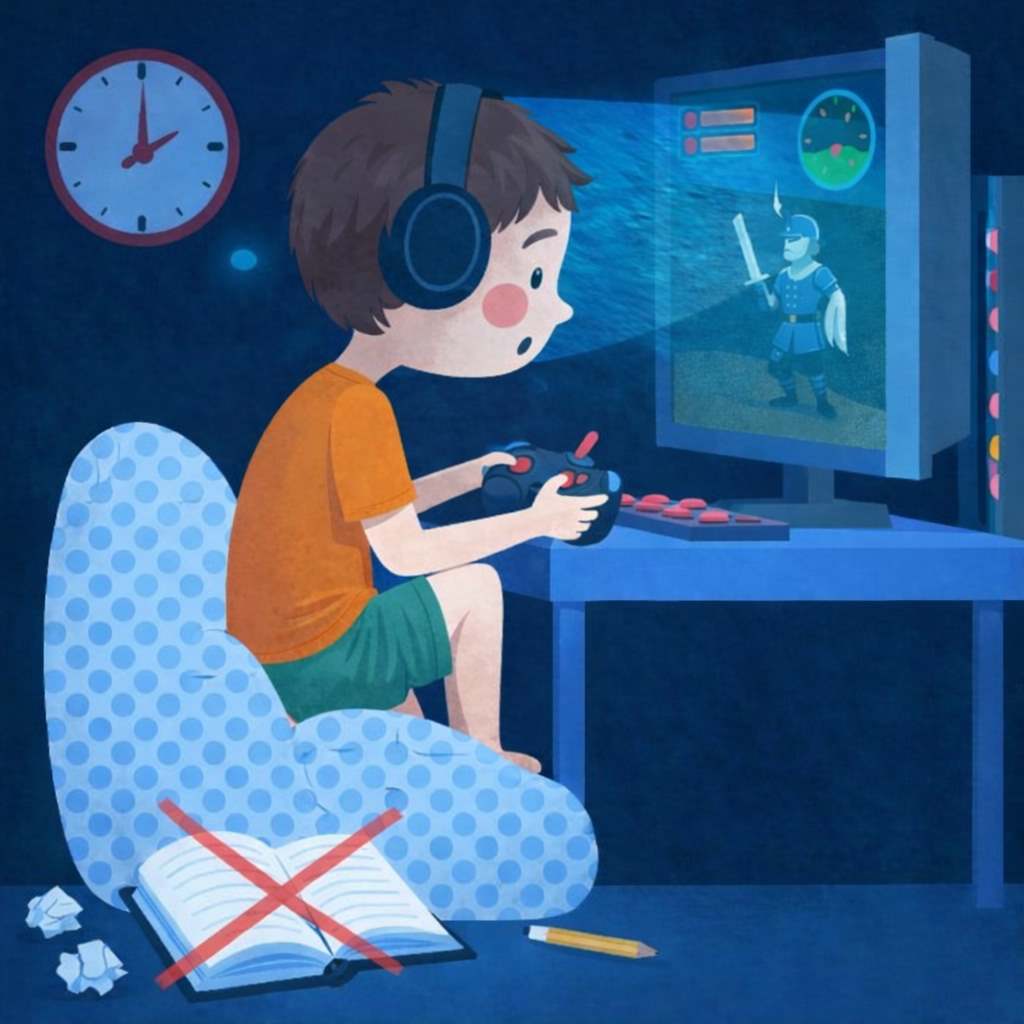
Digital games are often seen only as a way to have fun, but they can also help children develop important skills. When played in moderation, many games support learning and personal growth. However, spending too much time in front of a screen can also create serious problems. For this reason, it is important to look at both the positive and negative sides.
First of all, digital games can improve cognitive skills. Strategy and puzzle games require players to think carefully, make plans, and solve problems. For example, in a strategy game, a child needs to manage resources and decide the best way to reach a goal. This process strengthens critical thinking and decision-making. In addition, action games can improve hand-eye coordination and reaction time. Many games also encourage teamwork. Online multiplayer games teach children how to communicate, share responsibilities, and work toward a common objective.
On the other hand, playing games for too many hours can lead to health and social issues. Children who spend most of their free time gaming may become less physically active, which can cause weight problems and poor posture. Excessive screen time may also affect sleep quality, especially if children play late at night. Moreover, some children might lose interest in schoolwork or avoid spending time with family and friends. In extreme cases, gaming can become an unhealthy habit that is difficult to control.
In conclusion, digital games can be both beneficial and harmful. The key is balance. When children play age-appropriate games for a limited time, they can gain valuable skills while still enjoying other activities in their daily lives.