

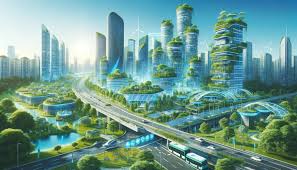
A sustainable city is one that meets the needs of its current residents without harming the environment or compromising the ability of future generations to meet their own needs. In designing such a city, several key features would be included to ensure it is eco-friendly, efficient, and livable for everyone.
First, the city would prioritize renewable energy sources like solar, wind, and hydropower. Every building would have solar panels on its roof, and wind turbines would be placed in strategic locations. This would help reduce reliance on fossil fuels and lower pollution levels. Additionally, energy-efficient technologies, such as LED lighting and smart energy systems, would be used in homes and public spaces to save energy.
Another important feature of the city would be its focus on green spaces. Parks, gardens, and tree-lined streets would be everywhere, improving air quality and providing residents with places to relax and connect with nature. Vertical gardens and rooftop farms would also be common, contributing to food production and cooling urban areas.
Transportation in this city would be designed to minimize pollution. Public transit systems, such as electric buses, trains, and trams, would be widely available and affordable. Safe bike lanes and pedestrian-friendly paths would encourage people to walk or cycle instead of using cars. For those who need personal vehicles, electric cars and shared car services would be promoted.
Waste management would be another key aspect. Recycling and composting programs would be strictly followed to reduce landfill waste. Advanced systems would convert organic waste into compost or bioenergy. Clean water systems would ensure every drop of water is used efficiently, and rainwater harvesting would be a common practice.
Finally, the city would be designed with people in mind. Affordable housing, clean air, and access to quality healthcare, education, and jobs would ensure a high quality of life for everyone. Smart technologies would help manage resources efficiently while involving citizens in decision-making processes.
In conclusion, a sustainable city is a blend of green energy, efficient systems, and community-focused design. By combining technology with care for the environment, this city would provide a healthier, happier future for its residents.