

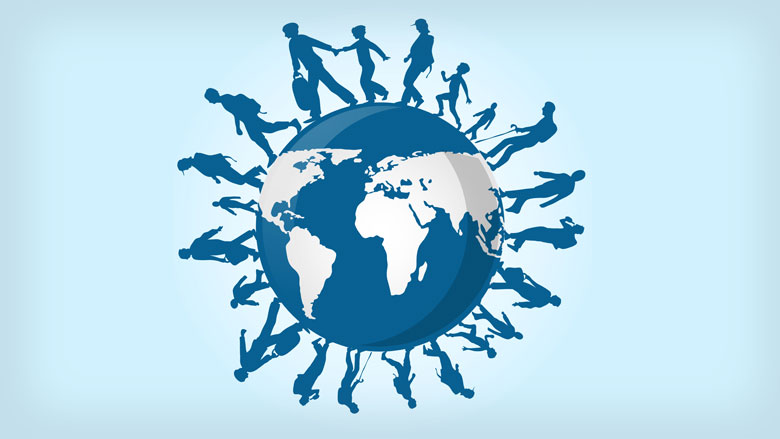
In today’s world,many people move to different countries for education, safety, better opportunities or a higher quality of life.This situation called “Global Migration “.Global migration has positive and negative effects on individuals and societies.
One of the biggest benefits of migration is economic growth.Immigrants contribute to the economic development of the country both through their work and their tax payments.Also, highly educated immigrants bring new insights into medical science and business, and help the country to develop.Migration increases cultural diversity, making society more colorful and open-minded, enabling people to learn different information and be more understanding of each other.
However, migration also brings some challenges. One of the biggest problems is adaptation.. Migrants may face language difficulties, cultural differencesor or they may be discriminated against. It can be hard for them to find good jobs.If they feel like they don’t fit in, they may isolate themselves and become unhappy.Another problem is that immigration can cause problems for both the country where people used to live and the country they move to. In the home country, when skilled workers leave, a “brain drain” occurs, weakening important areas such as health care and education. When skilled people leave, the country cannot develop. In the host country, immigrants can compete with locals for jobs, which can lead to tensions. Locals may worry that immigrants are taking their jobs or lowering their wages.
In conclusion, global migration has both advantages and disadvantages. It brings economic benefits and cultural enrichment, but it also presents challenges related to integration, resources, and social tensions. Governments must create fair policies to support both migrants and local communities for migration to be truly beneficial.