
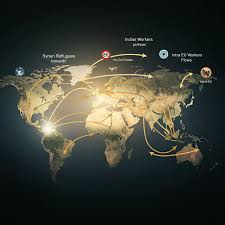
Global migration plays a major role in today’s world, bringing both advantages and challenges.
On the positive side, migrants can fill important job gaps in agriculture, construction, healthcare, and technology. This helps host countries maintain productivity and encourages the growth of new ideas and businesses. Cultural diversity also enriches societies: people share their languages, foods, music, and festivals, which promotes creativity and mutual respect. In countries with aging populations, younger migrants help support pension systems and contribute to the tax base. Diaspora communities build bridges between their home and new countries, sending remittances that boost development back home and fostering trade connections.
However, migration can strain public resources when large numbers arrive quickly. Schools, hospitals, and housing markets may face overcrowding, causing tensions. In some low-skilled sectors, an increased workforce can depress wages or lead to unfair working conditions. Language barriers and cultural differences may slow integration, leaving some migrants isolated or trapped in informal jobs. Meanwhile, countries that send many skilled professionals—such as doctors or engineers—can suffer from a “brain drain,” weakening their own health and education services.
To make migration work effectively, governments need fair labor laws, adequate investment in housing and healthcare, and strong language and skills training programs. By promoting anti-discrimination measures and providing clear paths to legal status, societies can balance migration’s benefits with its challenges and build more inclusive communities.