
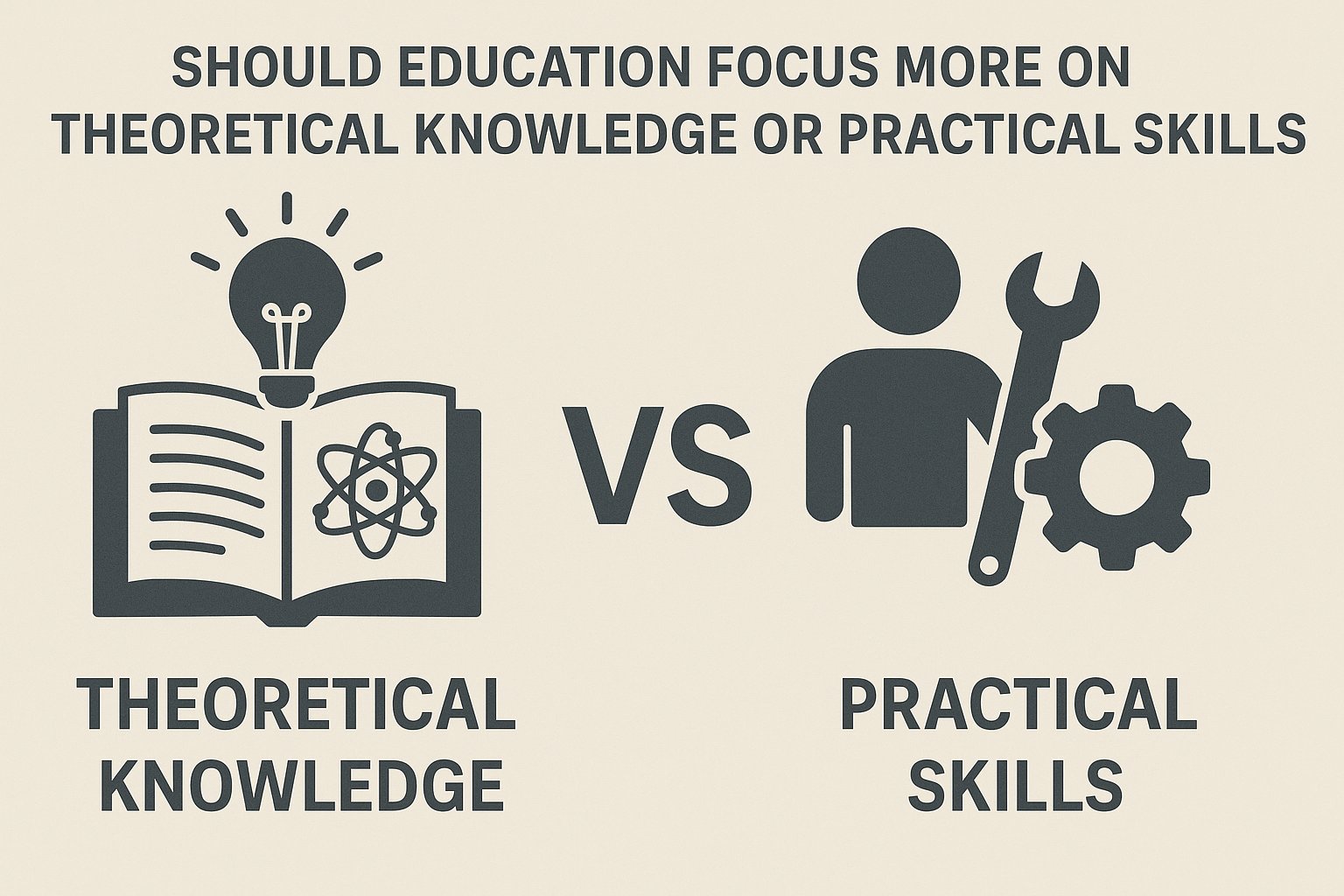
Education is one of the most important tools that enable individuals to acquire the knowledge and skills they will use throughout their lives. However, there is a constant debate about how this knowledge and skills should be acquired: Is theoretical knowledge or practical skills more important in education? The answer to this question may vary in many cases.
Theoretical knowledge allows individuals to understand a subject in depth. Theoretical knowledge in fields such as mathematics, physics and philosophy cannot be applied without understanding the basic concepts and principles. For example, an individual working in the field of engineering cannot design complex structures without knowledge of theoretical physics and mathematics. At the same time, theoretical knowledge develops critical thinking skills, giving individuals the ability to make sense of different situations and produce innovative solutions.
However, purely theoretical knowledge may not enable individuals to act effectively in the real world. Therefore, practical skills are also important. Especially in the modern world, a large portion of employers expect graduates to have skills that can be put into practice. An education based on practical skills helps students gain competencies such as problem solving, teamwork and time management. This allows students to adapt to working life more quickly after graduation.
As a result, theoretical knowledge and practical skills complement each other. While theoretical knowledge enables individuals to understand a subject, practical skills enable this knowledge to be applied in the real world. Therefore, education systems should adopt a model that balances both approaches.