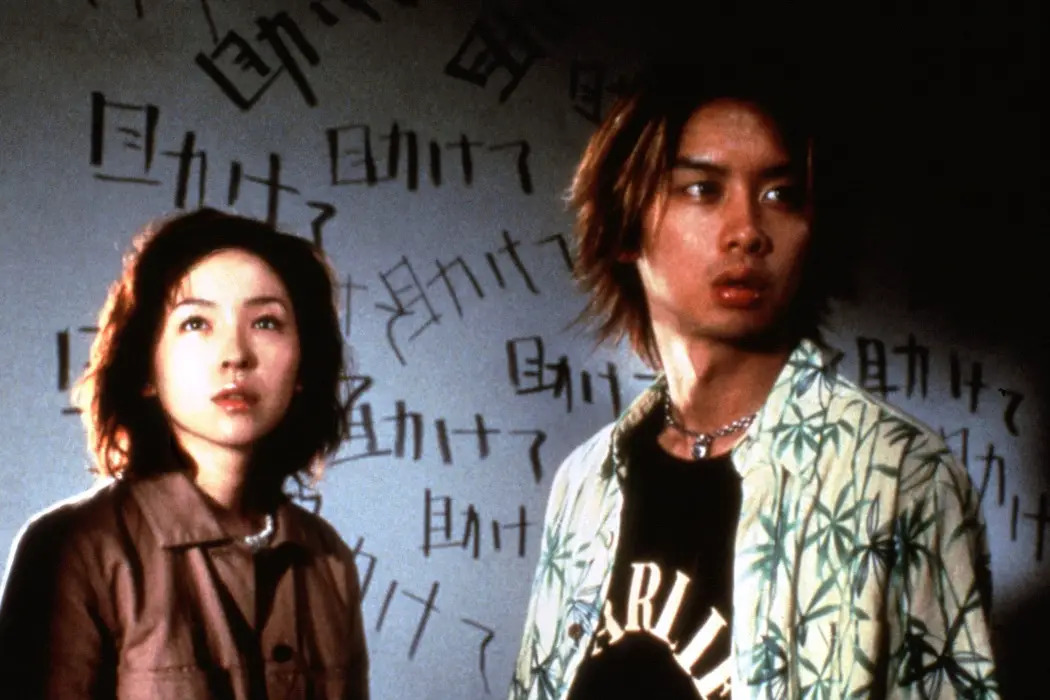
Kiyoshi Kurosawa’s Kairo is a techno-psychological horror film on isolation and technology’s impact on human connection. The film weaves two parallel storylines: one follows Michi, a woman who witnesses the strange, suicides linked to some haunted sites on a computer screen and doors lined with red tapes, while the other focuses on Ryosuke, a student whose curiosity about the internet leads him to encounter some visions of the dead. Both storylines converge as they investigate the supernatural force that links the living with the dead through digital mediums.
Kurosawa’s direction is deliberately slow and atmospheric, creating an unsettling tone rather than relying on conventional horror tropes. His use of negative space and muted colors enhances the film’s eerie mood, making the audience feel the characters’ despair. The film’s pacing may feel slow, but this enhances its themes well.The acting is subtle but powerful.
Cinematography plays a crucial role in reinforcing the film’s themes. Dim lighting, empty urban spaces, and long, static shots contribute to a feeling of loneliness. The film’s lack of a traditional antagonist makes it more disturbing—fear comes from the unknown.
Kairo is not just a horror film but a chilling reflection on human disconnection in the digital age.