
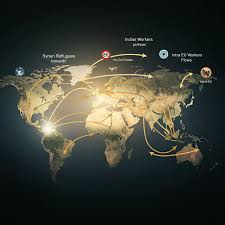
Global migration, the movement of people across international borders for various reasons such as employment, education, safety, or better living conditions, has become a defining feature of the 21st century. As societies become increasingly interconnected, migration brings with it a complex blend of opportunities and challenges. Understanding both the positive and negative aspects is essential to developing policies that maximize benefits while minimizing drawbacks.
One of the most significant positive impacts of global migration is the contribution to economic growth. Migrants often take up jobs that are in high demand, helping to fill labor shortages in sectors such as healthcare, agriculture, and construction. In many developed countries, immigrants support aging populations by not only increasing the workforce but also contributing to tax systems and social security. Additionally, migrants can bring entrepreneurial energy, starting businesses that create jobs and stimulate local economies.
Culturally, migration enhances diversity. It introduces new perspectives, traditions, languages, and cuisines, enriching the social fabric of host countries. This cultural exchange can lead to greater tolerance and understanding among different communities, fostering a more inclusive and dynamic society. Education systems, especially in multicultural societies, benefit from the presence of international students and diverse viewpoints in classrooms.
However, global migration also poses certain challenges. One concern is the strain it can place on public services such as healthcare, housing, and education, especially in regions experiencing sudden or large-scale influxes. In some cases, if not managed properly, migration can contribute to social tensions, particularly if there is a perception that newcomers are competing for jobs or government support. Additionally, there can be difficulties in integration, leading to the formation of isolated communities and potential marginalization.
