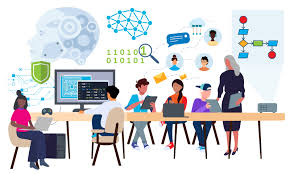
Technology has changed how people live, work, and communicate. It civilizes individuals by improving education, healthcare, and communication, making life more convenient. However, it also distances people from themselves and each other by reducing social interactions, increasing digital dependence, and developing unhealthy habits.
One of the most significant benefits of technology is on education. The internet provides unlimited access to knowledge, enabling students to learn new skills, watch educational videos, and read e-books. Online learning platforms allow individuals to study from anywhere, making education more accessible. Additionally, technology enables personalized learning, where students can progress at their own pace with interactive tools and digital resources. Technology also plays a essential role in healthcare. Medical advancements such as telemedicine, AI-assisted diagnoses, and robotic surgeries improve patient care and save lives. Digital health applications allow people to monitor their fitness and mental well-being. Wearable technology, like smartwatches, helps track vital signs, promoting a healthier lifestyle. These innovations make healthcare more efficient, benefiting both individuals and medical professionals. Communication has also greatly improved due to technology. People can easily connect with family, friends ect. through phones, social media, and video calls. Instant communication allows businesses to collaborate globally, boosting productivity and driving benefits.
However, while technology provides many benefits, it also creates challenges. One major issue is the reduction of face-to-face interactions. Many people spend excessive time on their devices, leading to weakened social skills and loneliness. Social media, while connecting people virtually, can sometimes replace meaningful real-life connections. This shift in interaction can impact emotional well-being and social development.
Misinformation is another problem. The internet is filled with false information that can influence people’s beliefs and decisions. Fake news spreads quickly, creating misunderstandings. Without proper critical thinking skills, people may struggle to separate reliable sources from unreliable ones. Another disadvantage of the technology is its impact on physical health. Overusing digital devices can lead to a non active lifestyle, causing obesity, postural disorders and other health issues. Many people prefer screen-based entertainment over outdoor activities, reducing their physical activity levels.
Furthermore, dependency on technology decreases peoples problem-solving skills. With the help of engines and smart devices, people rely less on theirselves. Over time, this can reduce creativity and independent decision-making.
In conclusion, technology plays a important role in individuals by improving education, healthcare, and communication. However, it also distances people from each other by reducing face-to-face interactions, misinformation, and health-related issues. To maximize its advantages, people must use technology less, balancing digital life with real-life. By this balance, people can enjoy the advantages of technology.