
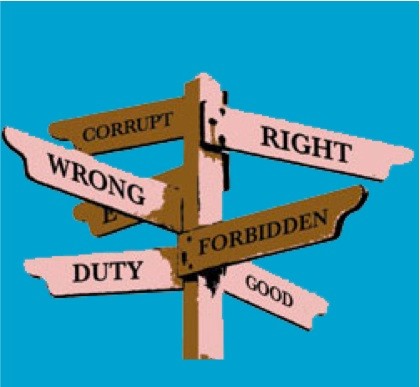
Majority has always had a large part to play in our choices, whether social, financial, or academic. Most individuals have the opinions of others stored away in their minds toserve as a compass during uncertain times. There is, however, a time when efficiency gives way to morality, where one’s own morals and values begin to influence one’s perception. This brings us to the question: what determines our morals, and how are they formed?
In my opinion, the formation of morals is mostly a questionof an individual’s character. How autonomous an individual is will have much to do with what ideologies or actions are “moral.” At a young age, people are molded by society, culture, and tradition, and often, they seek approval from their peers. This quest for legitimacy can inspire individuals to fit in with the moral convictions of the majority. Butmorality is not merely socially constructed; it is also verypersonal, constructed through individual experience, self-reflection, and critical examination.
As people mature and are subject to various opinions, they start questioning the morals that have been imparted tothem. At this stage, character plays a significant role in deciding whether one fits into the thinking of the majorityor develops his or her own moral code. A free thinker is likely to question prevailing social norms, developing their morals based on reason, empathy, and personal experiences, not accepting everything at face value as societal norms.
Moreover, “morality“ is relative; it evolves. The morals one upholds at a young age can be quite different from those one finds acceptable as an adult. Multiple outlooks, schooling, and life experience are all things that contributeto remaking moral values. For instance, someone who hada firm view on a social issue may find that their view altersafter engaging with different communities or acquiring new information. This alteration of opinion is a demonstration of the dynamic aspect of morality and how personal growth affects our moral beliefs.